Content Creator OPSEC & Streaming Safety
If you make content for a living, your face is your brand — and your single biggest liability. The whole business model is being visible, which is the exact opposite of good operational security. That tension is real, and pretending otherwise gets creators doxxed, swatted, and stalked. You can't be invisible; visibility is the job. But you can control the specific things that turn "public figure" into "findable at home." Here's how creators leak the dangerous stuff, and how to stop.
The threat model is different for you
Most OPSEC advice assumes you want to disappear. You don't — you want reach. So the goal shifts: protect the narrow set of information that enables real-world harm (your home location, legal identity, family, routine) while staying as public as you need to be with everything else. Compartmentalize. The audience gets the brand; nobody gets the address.
How location leaks
Location is the crown jewel, and it leaks in ways creators never notice:
- Reflections and windows. A street sign in a window, a recognizable skyline, a mall in a vlog. Investigators — and creeps — reconstruct locations from single frames.
- Metadata. Photos and videos can carry GPS coordinates in their EXIF data. Post the raw file and you may be publishing your exact coordinates.
- Routine. "Same coffee shop every morning" content is a stalking map. Patterns are as dangerous as any single leak.
- Real-time posting. Streaming or posting live tells everyone you're not home — or exactly where you are right now.
You don't have to reveal your address. You just have to reveal it one frame at a time.
The fixes that keep you visible
Separate identity from brand
Register domains, businesses, and accounts through privacy protections and, where appropriate, an LLC rather than your personal name. Public records tie your legal name to your address; a business layer breaks that chain. Use a separate email and phone number for anything public-facing.
Strip and delay
Remove metadata from every file before posting — most platforms strip it, but don't rely on that; do it yourself. And introduce delay: post about a location after you've left it, not while you're there. "Where I was" is far safer than "where I am."
Control the frame
Before publishing, scan the background. Windows, mail, screens, reflections, delivery boxes with your name, that distinctive building across the street. This becomes a thirty-second habit that prevents most location leaks.
Lock down the accounts themselves
Creators are high-value account-takeover targets — a hijacked channel is worth real money. Hardware security keys (FIDO2) on every account that matters. SIM-swap protection with your carrier, because SMS 2FA is a known weak point that attackers exploit specifically against public figures.
Streaming-specific safety
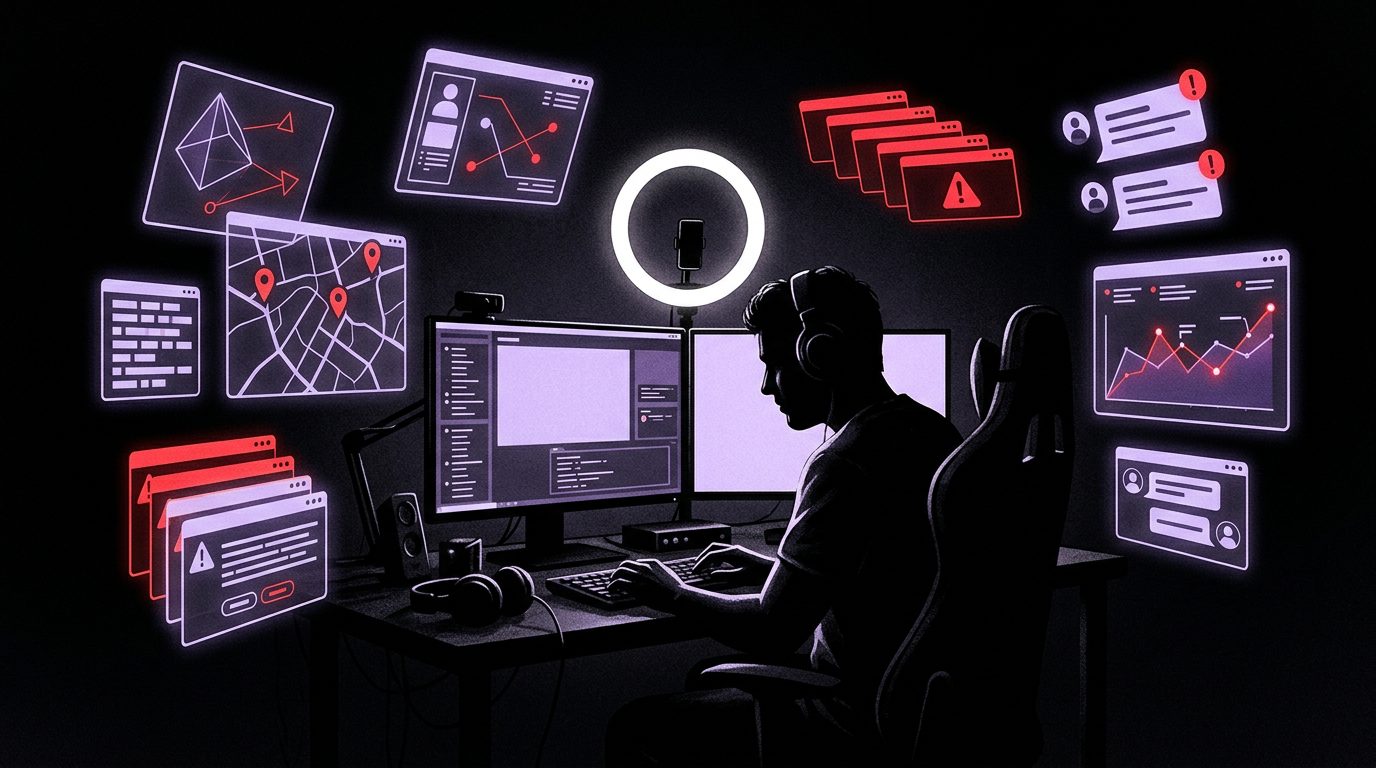
Live is the highest-risk format because mistakes broadcast instantly. Use a delay if your platform supports it. Never show notifications, browser tabs, or your desktop — a single popped-up email preview can leak your real name or location. Have a moderation team and a plan for coordinated harassment before it happens, not during. And know your platform's process for reporting threats fast.
The mindset
Good creator OPSEC isn't about fear or hiding — it's about intentional boundaries. Decide in advance what's public (your work, your personality, your brand) and what's private (your location, legal identity, family, routine), then defend that line consistently. The creators who get hurt usually didn't make a dramatic mistake; they made a hundred tiny ones nobody flagged.
Be as visible as your career needs. Just make sure the visibility is a choice you controlled, frame by frame. If you want your specific exposure mapped before someone with worse intentions does it, that's exactly what a footprint scan is for.
Have a doxxing response plan before you need one
Hope is not a plan, and "it won't happen to me" is how creators get caught flat-footed. Decide in advance what you'll do if your address leaks or a coordinated harassment campaign starts. Know how to reach platform trust-and-safety teams fast. Know your local law enforcement's non-emergency line so you can pre-emptively flag a swatting risk — some jurisdictions let at-risk individuals register a warning on their address. Keep evidence-collection ready: screenshots with timestamps, URLs, usernames. In the moment, panic destroys good decision-making; a written plan you made calmly does not.
If you have any public profile at all, also consider a monitoring routine for your own name and handles — the same OSINT techniques attackers use, turned inward. Catching a leak early, while it's on one obscure forum, is far more manageable than discovering it after it's spread. You're essentially running reconnaissance on yourself, on a schedule.
The tradeoff is real, and that's fine
I won't pretend good OPSEC costs a creator nothing. The most engaging content is often the most personal, and personal leaks information. Every boundary you set — delaying location posts, keeping family off-camera, not going fully live — has some engagement cost. That's a legitimate business decision, and it's yours to make. My job isn't to tell you to hide; it's to make sure you understand the exact risk of each choice so you're trading knowingly. A creator who decides to show their neighborhood with full awareness of the risk is doing OPSEC correctly. The one who leaks it by accident is not. Intent and awareness are the whole difference.
// protect_your_brand
Map your exposure.
I'll find what your content leaks — location, identity, routine — before someone with worse intentions does.
Book a Footprint Scan →